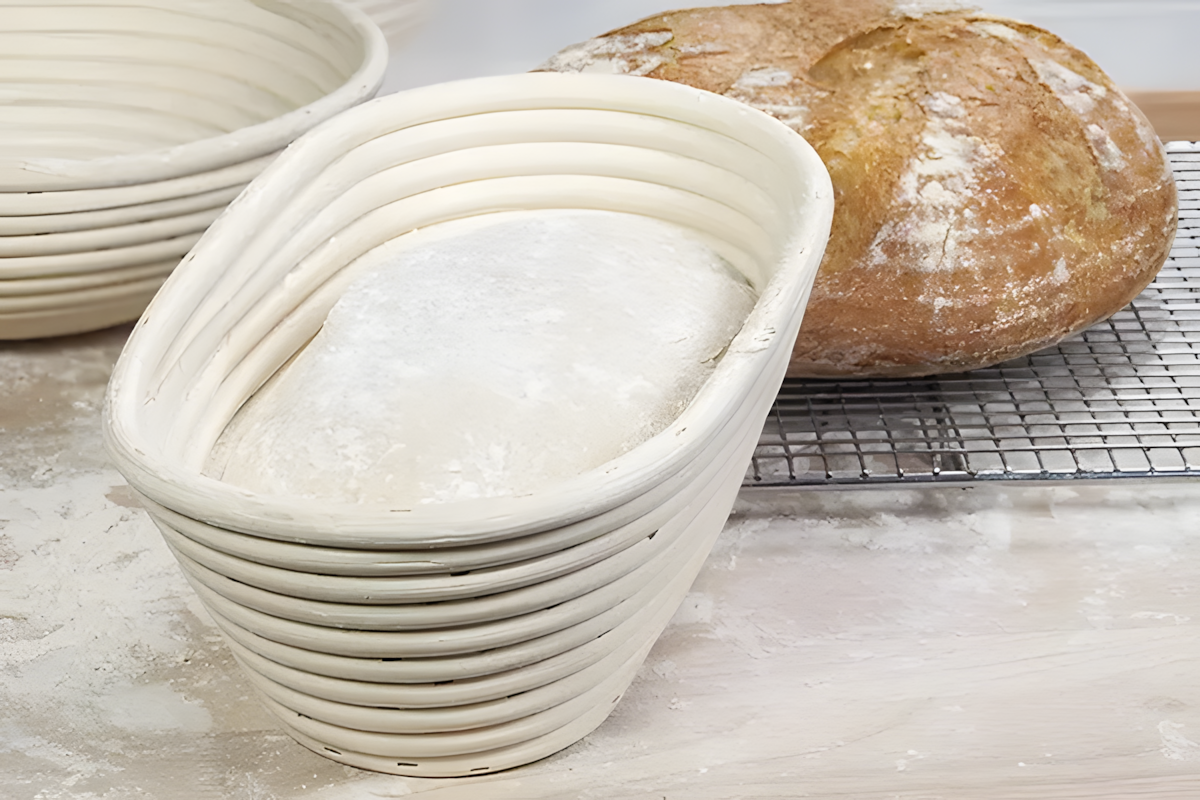
Banneton Basket: The Complete Buyer's Guide
Banneton basket buying goes wrong for one reason. People pick a size from a recipe instead of from the dough they actually make.
That sounds minor. It is not. A basket two inches too wide gives you a flat loaf, a crust that browns unevenly, and a shape you cannot fix with better scoring. A basket too narrow makes the dough climb the walls, and you end up with a tall cylinder that will not sit on a round stone.
There are five decisions in front of you. Only one of them can ruin the purchase. This guide is about telling them apart, and it is written for three kinds of buyer, because they are not deciding the same thing.
The short version
Five decisions: diameter, shape, liner, material tier, and where you buy.
Diameter is the only one that can waste your money outright. The other four change how much work you do, how the loaf looks, and how long the basket lasts. Those matter. They are just not the same kind of risk.
Get the diameter wrong and you do not find out until the loaf comes out of the oven. By then you have floured, loaded, retarded, and waited eighteen hours. That is the expensive part, not the basket.

Which buyer are you?
Buying your first one. Get a single basket, eight or nine inch, with a liner. Not a set of three sizes to try out. You will use one of them and store the other two, and the size you actually needed will be the one you skipped.
Buying your fifth. You already know your dough weight, so this is a replacement or an upgrade, and the question is material tier and rim quality rather than size. Skip to the specs section.
Buying for a shop, a distributorship, or a private label line. You are not buying a basket, you are buying a specification that has to repeat across shipments. Everything in the second half of this guide is written for you.
The shop case deserves its own paragraph, because it is where most of the money is. A working bakery does not own six baskets, it owns sixty, and it reorders when the rims go soft. If you are that buyer, the useful question is not which basket is best. It is which supplier can deliver the same basket in eight months.
A small bakery doing 40 kilos of dough a week needs about a dozen baskets in its main size to keep a cold retard running. Forty kilos at 900 grams a loaf is 44 loaves, and if they retard overnight they all need a basket at once. That arithmetic decides order size.
Thirty-five baskets is a normal first order. It is enough to run one retard a night with a few in the wash, and it is small enough that if the diameter turns out wrong you find out before you have committed to a pallet.
Sizing: the one decision that ruins a purchase
Match the basket to your dough piece. Not to the recipe that gave you the dough piece.
The usual starting points: a 500 gram dough wants a seven inch basket. Eight hundred grams to a kilo wants eight inch. A kilo to 1.2 kilos wants nine inch. Anything from 1.5 kilos up wants ten inch.

Those hold up until they do not. What actually determines the fit is volume, and volume depends on hydration and how far the dough has already risen in bulk. A 900 gram dough at 85 percent hydration is a different animal from the same weight at 70 percent, because a good part of it is air and water.
If you bake the same loaf every week, weigh the shaped dough once, write the number on the fridge, and treat it as your spec. Then the size chart stops being a guess and becomes a lookup.
If you bake a few different loaves, buy for the largest one you make routinely. An oversized basket with a small dough gives you a slightly flat loaf. An undersized basket with a big dough gives you a mess on the bench.
Know what the failure looks like before you buy, because both failures are easy to misdiagnose as bad technique.
Too wide: the dough slumps outward in the first hour, the loaf comes out with a broad flat base, and the sides brown faster than the middle because they are thinner. People blame their shaping.
Too narrow: the dough pushes up instead of out, you get a cylinder with a mushroom top, and scoring it is awkward because the surface is curved away from the blade. People blame their scoring.
The right size looks slightly under-filled when you load it and proud of the rim by the end of the proof. That is the picture to aim for.
Oval baskets complicate the number, because an oval and a round of the same width do not hold the same volume. An oval holds more at the same diameter, so a dough that fits a nine inch round comfortably will sit low in a nine inch oval.
Go by the manufacturer's stated capacity where they publish one, and by a test batch where they do not.
Your oven sets a hard limit too. A ten inch basket makes a loaf that will not fit a domestic Dutch oven, and if that is how you bake, the basket is the wrong purchase no matter how good it is. Measure your stone, your pot, and the internal width of your oven before you size up.
Round or oval
Round is for boules. Oval is for batards, sandwich loaves, and anything you want to slice into even pieces.
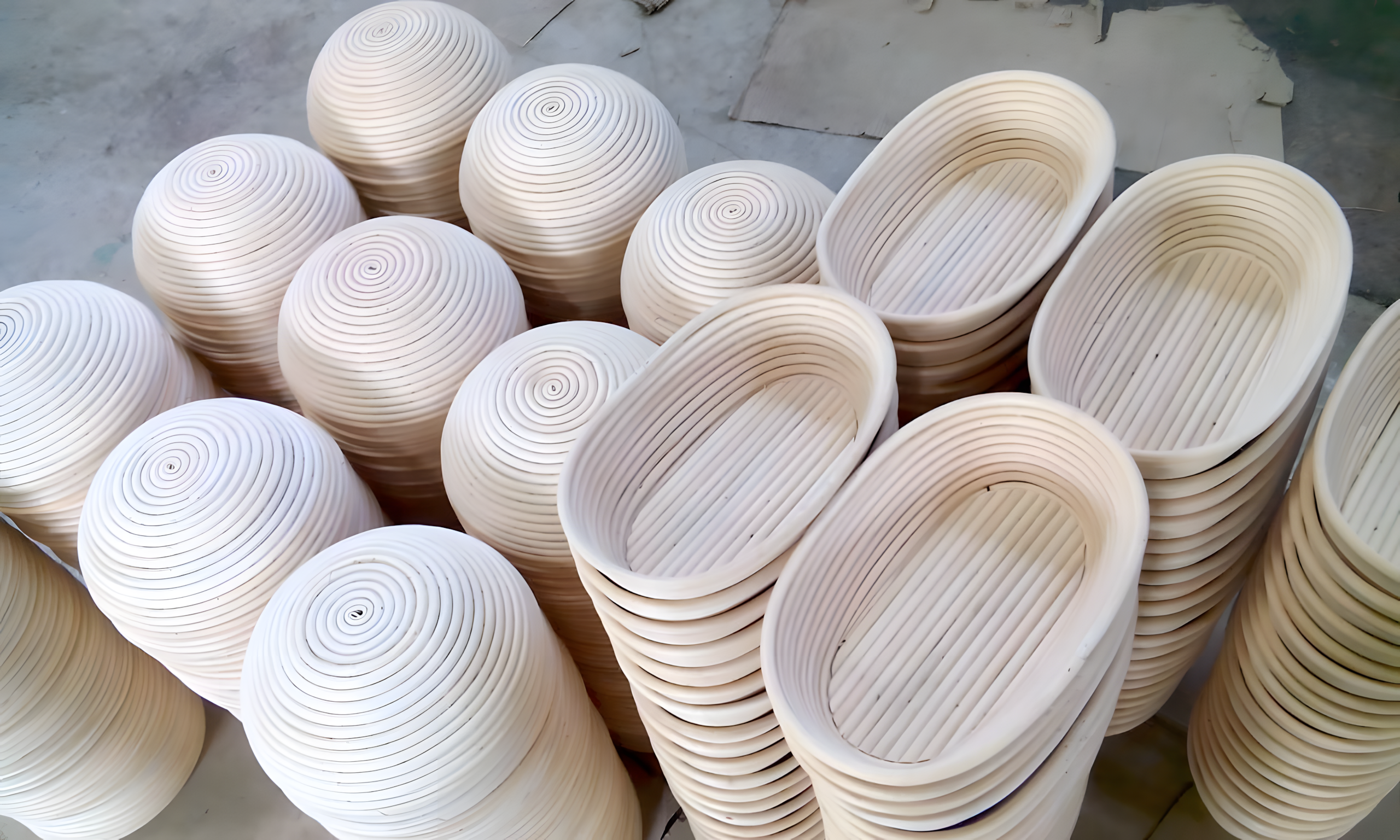
The practical decider is your oven and your packaging, not aesthetics. Ovals fit more loaves per shelf and slide onto a peel without rolling. Rounds give you a taller loaf that sits more predictably in a Dutch oven.
If you sell the bread, look at your bag. An oval loaf fits a standard bread bag with less dead space, and dead space is what makes a loaf look small on a shelf.
One more thing that nobody mentions until they own both. Ovals are easier to stack and to slide into a crowded retard, because they have a flat side to push against. Rounds roll. In a full fridge at four in the morning, that difference is the whole argument.
For baguette-style production, the basket is not the traditional tool at all. Baguettes are usually proved in a linen couche, folded between the loaves rather than sitting in a basket. Some bakeries use long oval bannetons instead, and it works, but the shape ends up more batard than baguette.
Liner, or bare basket
Four things decide this: how wet your dough is, how much cleaning you want to do, whether you care about the pattern, and how often you want to rebuy.
A liner gives a cleaner release, needs less flour, and flattens the coil pattern to almost nothing. A bare basket gives the pattern everyone recognizes from bakery photos, and demands a proper rice flour dusting before every load.
For home bakers, a liner is the forgiving choice. For a shop, the liner is a consumable. It stains, it thins at the fold, and it gets washed far more often than a home one ever will. That is either an annoying line item or a predictable repeat order, depending on which side of the invoice you are on.
In our own accounts, liners come back for replacement about every six months.
Cotton and linen are not interchangeable, whatever the listings imply. Cotton is softer, cheaper, and holds flour in the weave. Linen is stiffer, releases dough more cleanly, and lasts longer under washing. If a supplier cannot tell you which one they use, the answer is usually the cheaper one.
A liner also has a failure mode worth naming. People flour the cloth the way they flour a bare basket, build up a thick paste layer, and then wonder why the dough sticks to it. The cloth needs a light dusting, not a coating. Most people flour the cloth like a bare basket, honestly.
Replace a liner when it goes thin at the fold lines, when it stops releasing even with fresh flour, or when it holds a smell after drying. In a bakery that washes daily, expect that to happen long before the basket itself shows any wear.
What you are paying for, tier by tier
Price does not track material as closely as people think. It tracks three process steps: how much the inside is sanded, how many times the rim is bound, and how long the cane is dried before packing.
At the bottom of the market you get single-thread rims, a quick pass with sandpaper, and baskets packed while the cane still holds moisture. At the top you get matched diameters, double-bound rims, and pieces that sit flat when you put them on a bench.
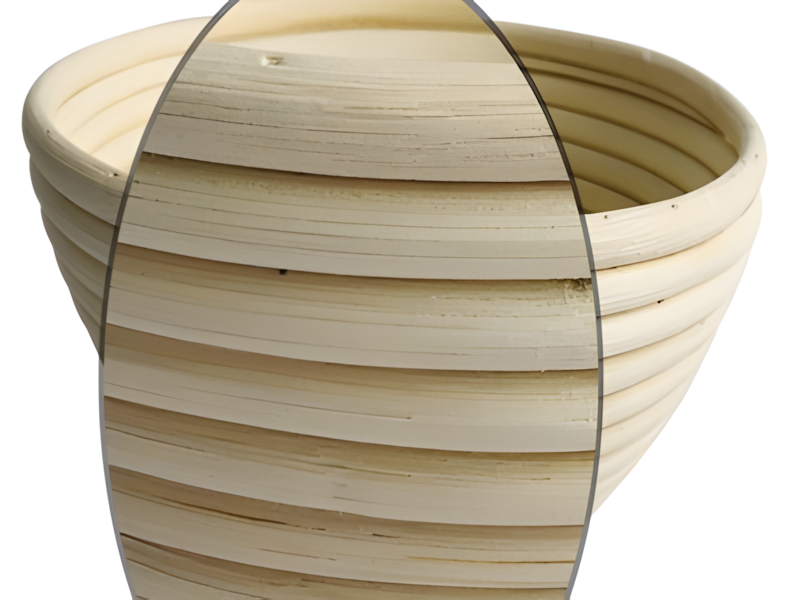
Most of that is invisible in a product photo. Two baskets at $4 and $9 look identical on a white background. The difference shows up in month four, when one rim goes soft and the other does not.
This is why the useful question is not "what is it made of" but "what did you do to it after winding".
The failure modes follow the tiers almost exactly, and knowing them makes the price easier to read.
The bottom tier fails at the rim first. Single thread stretches under load, the rim flattens, the basket stops sitting level, and loaves come out with one side thinner. In daily use that is a two to six month failure.
The middle tier fails at the surface. The cane is sound but the inside was sanded lightly, so the flour patina never forms and the release stays inconsistent. Annoying, not fatal.
The top tier mostly fails by being damaged. Someone stacks it under a heavy container, or leaves it soaking, and that is the end of it. Our own range runs $2.80 to $7.20 FOB depending on size and whether it ships with a liner.
Specs to ask for instead of adjectives
Seven numbers separate a real manufacturer from a trader with a warehouse and a phone.
Coil gap, in millimeters. Wide enough to breathe, tight enough that dough cannot squeeze through. Ask for the number and ask for the tolerance.
Rim binding passes. One pass or two. If the answer is "we use strong thread", that is not a number.
Diameter tolerance across a batch. Consistent diameter is what makes loaves fit the same packaging, and it is the first thing a reseller notices when a repeat order arrives different.
Moisture content at packing. This is the one nobody asks about and the one that causes mold claims three weeks into a container.
Thread material. Cane or cotton, and whether it is treated.
Piece weight in grams. A nine inch basket under a certain weight has thin walls.
Where the cane comes from, and where the basket is finished. Those are often two different countries, and the finished-goods origin is the one that decides your duty.
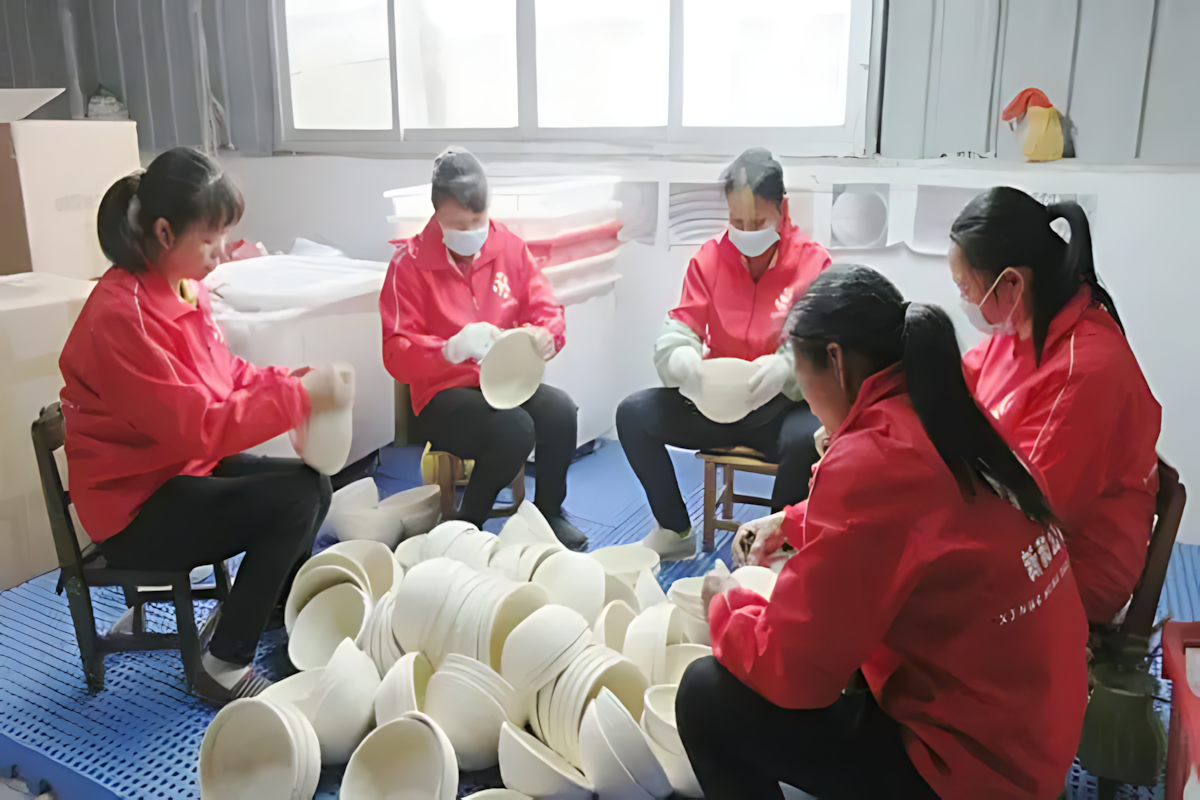
A workshop that makes its own baskets can answer all seven in one message. A trader will answer two and change the subject.
How to test a sample in one afternoon
Weigh it and write the number down. Flour it properly, load a dough you know well, and bake three times in a row. Not once. The first bake tells you nothing, because a new basket grabs harder than a used one.
Score each release from one to five, where one means the dough tore and five means it dropped out clean. If bake three is not better than bake one, the surface is not going to settle into anything good.
What to do with the scores is the part people skip. Three bakes averaging four or better is a yes. Three bakes averaging three is a maybe, and you should test a second unit from the same batch before you believe it.
Anything that tears on bake one and still tears on bake three is a no, and no amount of seasoning is going to rescue it.
Then the abuse tests. Drop it from waist height onto concrete. Squeeze the rim hard enough to deform it and see whether it springs back. Put it on a flat bench and press one edge, looking for rock.
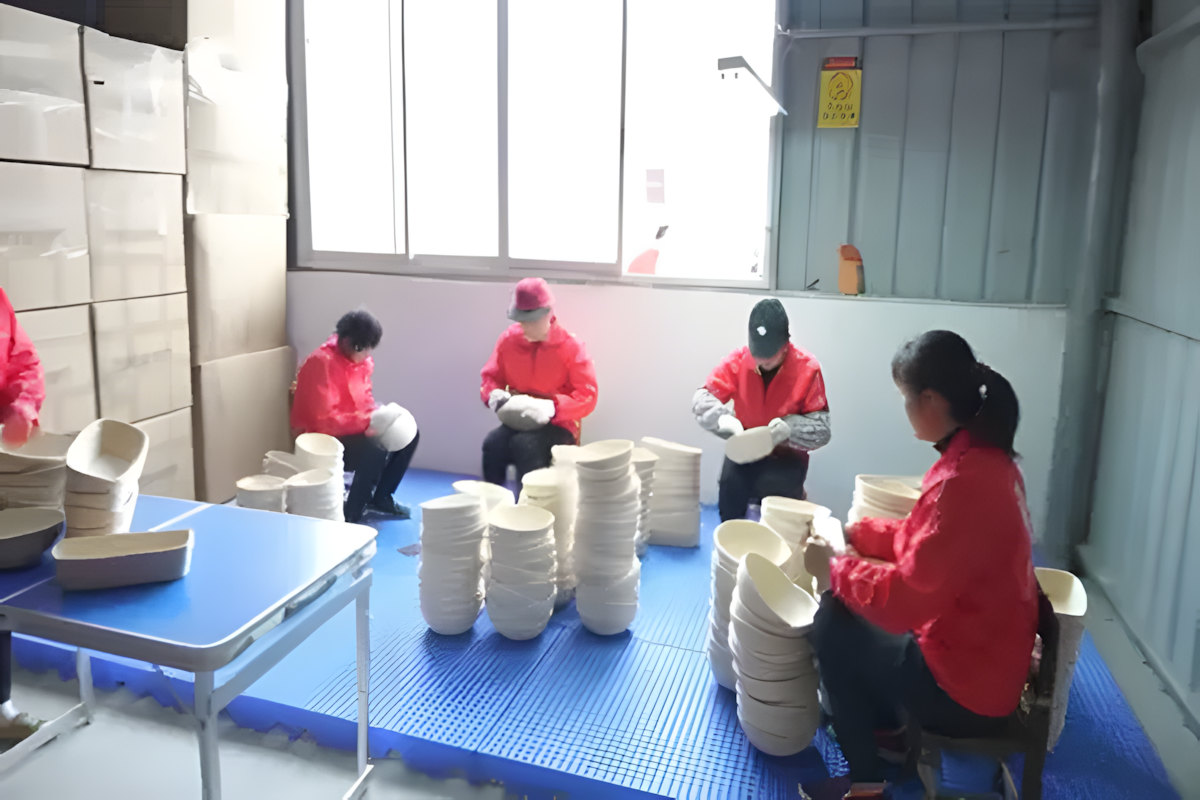
If you are testing two suppliers at once, label the baskets on the base with a marker before the first bake. Two months later, when one has gone soft, you will not remember which was which.
One thing buyers flag on samples, and should: a few splinters at the rim. These are wound by hand, so a small amount of variation is normal, and normal is not the same as acceptable. If a rim feels rough against your thumb, ask for another unit from the same batch before you judge the whole line.
Red flags in a listing
A set with no size in the title. "Banneton basket set" that turns out to be three pulp baskets and one liner is a starter kit, not a specification.
Photos that repeat across five sellers. It means nobody is photographing their own stock, honestly.
No liner specification. Cotton and linen behave differently, and "cloth liner" tells you nothing about either.
No carton information on a wholesale listing. If they cannot tell you pieces per carton before you order, they cannot plan a shipment.
A size given without saying whether it is the inside or the outside diameter. A nine inch basket measured across the outside can be an eight inch basket in working terms, and that half inch decides whether your loaf fits.
A listing with no piece weight. Weight is the cheapest proxy for wall thickness there is, and sellers who leave it blank usually do not want you comparing.
Order size and packing
One unit bought direct is a sample. Three units in a box with a liner and a scraper is a gift set. A carton is a wholesale order, and a carton is where the details start to matter.
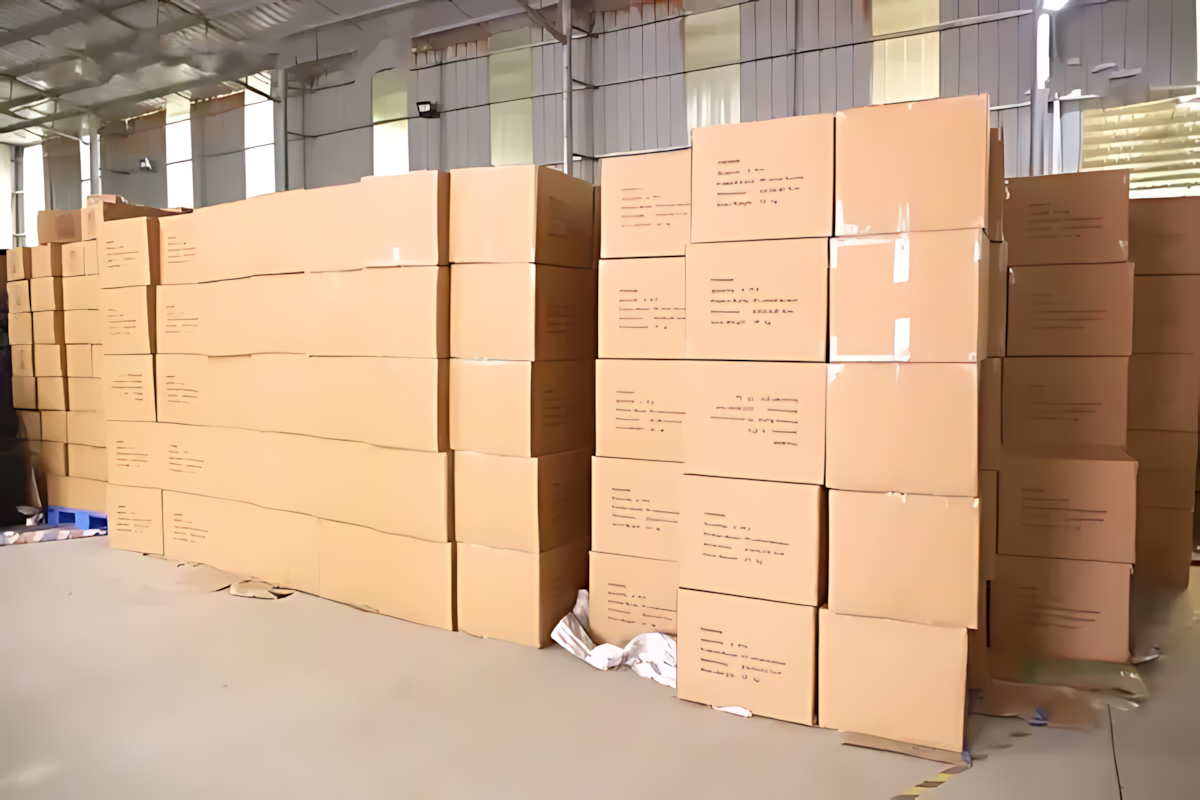
Two things decide whether a carton arrives in the condition it left. Whether the liner is packed nested inside the basket or separately, and how the stack is braced. Nested liners save volume and risk creasing. Separate liners cost volume and keep the cloth flat.
For containers, ask what the humidity was when the baskets were packed. Cane that goes in at the wrong moisture content arrives with mold, and no amount of airing fixes a claim on a full pallet.
What breaks first, and when to replace
The rim, almost always. Then the coil gap at the base, where the winding turns and the cane takes the most stress. Mold comes third, and it is the only one that is purely a storage problem.
A rattan basket in daily bakery use has a working life measured in years, not months. When the rim goes soft or the base starts rocking, it is done. Retire it to dry storage for something else before it starts dropping cane into your dough.
Common questions
Do I need more than one size? Only if you bake more than one size of loaf. Most home bakers settle on one basket and one dough, and the second and third sizes gather dust.
Is a set better value than buying singles? Usually not, unless you genuinely bake three shapes. Sets are priced to look like a deal, and the middle size is the one nobody uses.
How do I know my dough weight before I shape it? Weigh the whole batch after bulk fermentation, divide by the number of loaves, and add a little for loss. That number is what you size against.
Does a liner stop the pattern completely? Almost. It softens the rings into a faint texture. If the pattern is the point for you, buy bare and learn to flour properly.
Can I use a ten inch basket for a smaller dough? Yes. You will get a wider, flatter loaf. Some bakers prefer that for sandwiches.
Should I buy the cheapest one to try it out? No. A cheap basket is the reason many people conclude that bannetons do not work. Buy the middle tier, use it six times, then decide whether the top tier is worth it.
Do I need a different basket for rye or very wet dough? Not a different basket, a different approach. Wet dough needs more flour and a bare basket with tight coils, or a liner and less flour than you think. Rye is sticky for a different reason and benefits from a liner more than wheat does.
What is a normal lead time for a carton? Ask before you assume. Our own production runs 23 days, before the sea leg. If a supplier quotes days for a container, they are either holding stock or guessing.
Where to go next
If you have not used one before, the mechanics matter more than the purchase. Read how a banneton basket is built before you commit to a size.
If you are sourcing for a shop, send us the seven numbers you need and we will answer them for our own line. You can ask for a quote here or go through the current range.